

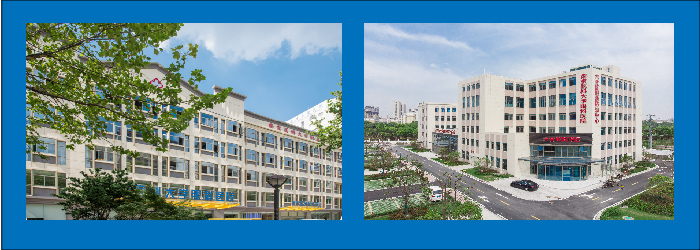
The Eye Hospital of Nanjing Medical University is affiliated with the Fourth Clinical Medical College of Nanjing Medical University, Jiangsu Provincial Red Cross Eye Hospital, a Grade A tertiary eye hospital, a national key clinical specialty, and a national drug clinical trial institution. It was established on the basis of the former Nanjing Eye Hospital of China-Japan Friendship Hospital, with the preparation and construction undertaken by Nanjing Medical University.
The hospital serves as the Ophthalmology Center of Nanjing Medical University, a Graduate Training Base of Nanjing Medical University, a Postdoctoral Innovation and Practice Base of Jiangsu Province, and a doctoral degree authorization point in the primary discipline (Optometry). In December 2018, it was jointly approved by the Provincial Department of Education and the Provincial Health Commission as the Affiliated Ophthalmology Hospital of Nanjing Medical University. The hospital houses a Central and Local Jointly Built University Characteristic Advantage Discipline Laboratory, the Key Laboratory of Optometry and Visual Science of Nanjing Medical University, and the Key Laboratory of Ophthalmology of the Red Cross of Nanjing Medical University. It undertakes teaching and research tasks for the Optometry and Optometric Medicine programs at Nanjing Medical University, with Optometry being a national-level first-class undergraduate major construction point.
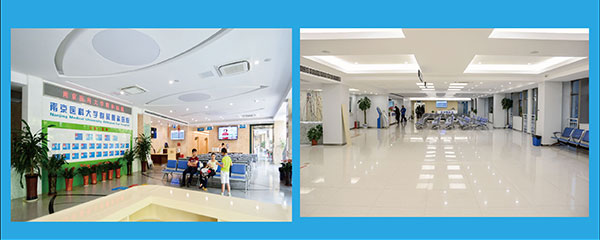
The hospital currently covers an area of 25,000 square meters, with two campuses located on Hanzhong Road and Lihe, and has 120 approved beds. It employs over 300 staff members, including 67 with associate senior titles or above, 9 doctoral supervisors, and 15 master's supervisors. As a non-profit ophthalmology specialty hospital of tertiary grade A, it integrates medical treatment, education, and research, and holds a certain influence both domestically and internationally.
R1: "Diabetes" must be translated as diabetes.
The hospital serves as the Dry Eye and Ocular Surface Disease Sub-center of the National Clinical Research Center for Ophthalmology, the Clinical and Research Center for Diabetic Retinopathy of the National Clinical Research Center for Ophthalmology, the leading unit of the Jiangsu Provincial Ophthalmology Medical Quality Control Center, the Jiangsu Provincial Primary Care Specialty (Ophthalmology) Incubation Center, the Jiangsu Provincial Research Center for Myopia Prevention and Control in Children and Adolescents, the Jiangsu Provincial Engineering Research Center for Ophthalmology and Visual Science, the Jiangsu Provincial Science Popularization Education Base, the Jiangsu Provincial Training and Assessment Base for Optometrists and Dispensers, the Jiangsu Provincial Demonstration Base for Eye Health Education in Primary and Secondary School Students, the Jiangsu Provincial Innovative Team for Science and Education-Driven Health Advancement, the leading unit of the Nanjing Municipal Primary Care Ophthalmology Medical Quality Control Center, the Nanjing Municipal Primary Care Specialty (Ophthalmology) Incubation Center, the Key Laboratory of Ophthalmology and Visual Science in Nanjing, the Second Eye Bank of the Red Cross in Nanjing, the Myopia Prevention and Control Base for Children and Adolescents in Nanjing, and the Nanjing Specialist Nurse Training Base for Ophthalmology.
We innovate in disciplinary development, striving to keep diagnostic and therapeutic technologies in sync with international advanced standards.
Among the thirteen subspecialties (fifteen professional directions), the departments of cataract and fundus diseases are designated as key clinical specialties in Jiangsu Province. Each specialty emphasizes medical quality, talent development, and technological innovation, capable of independently performing advanced domestic and international diagnostic and therapeutic techniques, while also forming their own distinctive characteristics.
Representing the most technically challenging field in ophthalmology—the fundus disease department—it is one of our hospital's specialty units, accounting for approximately 30% of hospitalized surgical patients. It enjoys a high reputation both within and outside the province. Our hospital has pioneered four innovative clinical techniques: "Trophic Vascular Intraocular Ligation for Retinal Vascular Malformations," "Autologous Lamina Propria Filling for Congenital Optic Disc Pit with Retinal Detachment," "Posterior Scleral Reinforcement for High-Myopia Macular Retinoschisis," and "Extramacular Packing Combined with Vitrectomy for High-Myopia Macular Vitreomacular Tethering and Retinal Detachment." These techniques are internationally leading innovations and have repeatedly represented Chinese ophthalmologists in exchanges with global expert teams.
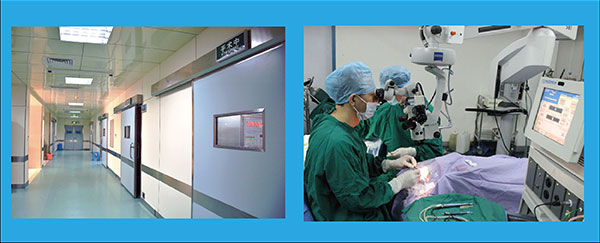
The intelligent navigation multifocal artificial lens implantation surgery, femtosecond laser combined with corneal cross-linking myopia correction surgery, intelligent navigation robot laser surgery, dry eye photon therapy, thermal pulsation therapy and other disease treatments are all newly developed diagnostic and therapeutic technologies at home and abroad.
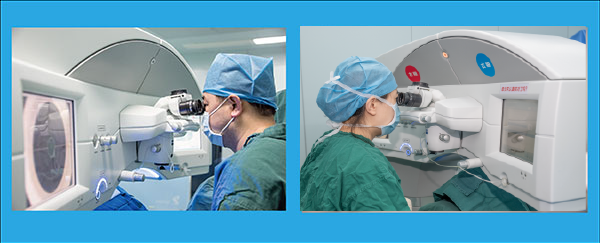
The hospital has over a hundred mainstream ophthalmic diagnosis and treatment equipment at home and abroad, including Zeiss VisuMax full femtosecond laser, German SCHWIND AMARIS 1050RS excimer laser system, U-view femtosecond laser surgical platform, Da Vinci femtosecond laser, EX500 excimer laser myopia treatment device, American LENSARLLS-FS 3D femtosecond laser cataract surgery system, American Alcon CONSELLATION phacoemulsification vitrectomy machine, LLS-FS 3D American LENSER surgical navigation system, German Zeiss CALLISTO eye 3.7, ARTEVO800 (dual navigation) ARTEVO700 ophthalmic surgery navigation system, OCT navigation surgical microscope, French EYE0P1 ultrasound glaucoma treatment device, Physician waterfall multi wavelength laser machine (Vision ONE), German NAVILAS waterfall navigation laser, French LightTech VITRO 577 micro pulse waterfall laser, 810nm micro pulse laser, Australian ULTRAQ floaters laser treatment device, YAG laser machine, 532 fundus laser machine, and other imported treatment equipment, as well as German Heidelberg HRA+OCT (fundus imaging), British UPTOS P200dtx (fundus imaging), German Zeiss high-definition optical wide-angle fundus camera CLARUS 500, OCT (optical coherence tomography), a complete set of visual electrophysiological examination instruments, field of view examination instruments, fundus photography, and more. fundus fluorescein angiography and choroidal angiography, new ophthalmology specialized A/B-ultrasound with 20Hz, corneal topography map IOL-master、 A series of imported examination equipment including confocal microscopy, corneal endothelial examination instrument, dry eye apparatus, retinal thickness analyzer, etc.
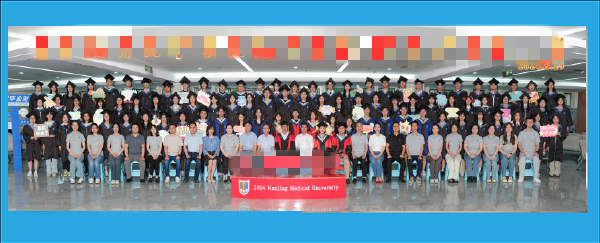
Hospitals emphasize the simultaneous progress of teaching, scientific research, and clinical work.
The teaching system of the department has developed into an integrated teaching system that includes doctoral and master's students in ophthalmology and optometry, four-year undergraduate optometry major, five-year undergraduate optometry medicine major, 3+2 undergraduate optometry major, and adult continuing education optometry major. It has also entered the national advanced level. The Eye and Vision Optics major has been awarded the first batch of "National First Class Undergraduate Major Construction Points", Jiangsu Province Brand Major, and Jiangsu Province Five Star Major; The major of optometry medicine has been rated as a characteristic major in Jiangsu Province; In 2023, won the "Breakthrough Award for First Class Ophthalmology Major, Outstanding Contribution Award for First Class Ophthalmology Curriculum, and Innovation Award for Ophthalmology Teaching Reform (Forge)" by the Teaching Guidance Committee of the Ministry of Education's Higher Education Ophthalmology Medicine Major. The department has trained over 2000 undergraduate students in optometry and 172 graduate students in ophthalmology and optometry for the country, including 47 doctoral students.
Professors Jiang Qin, Yao Jin, and other experts have successively edited key textbooks in Jiangsu Province, including "Comprehensive Training of Ophthalmology", deputy editor in chief, and participated in the compilation of the fourth edition of "Ophthalmology" by the National Health Commission, the second edition of "Clinical Skills Training and Practice", the English version of "Ophthalmology", the eight year textbook of "Ophthalmology", the third edition of "Theory and Methods of Ophthalmology", and the third edition of "Ophthalmology". They have also edited monographs such as "OCT Vascular Imaging Atlas", as well as popular science reading materials such as "Handbook for Prevention and Control of Myopia in Primary and Secondary School Students" and 18 national level textbooks and monographs.
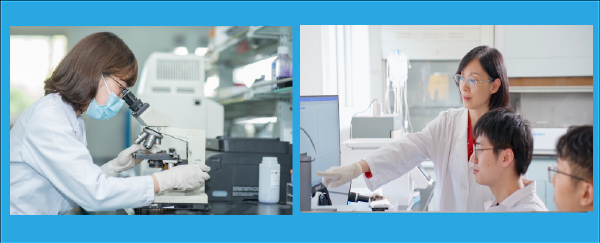
One recipient of the National Outstanding Youth Science Fund, one recipient of the Changjiang Scholar Youth Award Program of the Ministry of Education, one recipient of the National Excellent Youth Science Fund, one recipient of the Jiangsu Provincial Natural Science Foundation Excellent Youth Fund Project, one recipient of the third level training of the "333 High level Talent Training Project" in Jiangsu Province, one innovative candidate of the "Youth Science and Technology Innovation U35 Peak Climbing" in Jiangsu Province, one recipient of the Jiangsu Province Excellent Postdoctoral Program, one recipient of the Jiangsu Province Youth Science and Technology Talent Support Project, and one outstanding young and middle-aged talent in Nanjing City.
Professor Jiang Qin, Dean, is a high-level talent in the "Six Talent Peaks" of Jiangsu Province. In 2020, he was named one of the "Top Ten Influential Hospital Management Experts" by the Chinese Medical Association and was selected as one of the "Top 100000 Scientists in the World" by the Global Scholar Database in 2022. 27 Chinese ophthalmology experts and scholars have entered the list, including Professor Jiang Qin from Jiangsu ophthalmology! In 2023 and 2024, it has been listed as one of the "Top 2% Global Scientists" by Stanford University in the United States for two consecutive years.
The hospital has undertaken a total of 24 projects funded by the National Natural Science Foundation, participated in 1 national "973" project, and completed 121 scientific research projects at provincial, municipal, and university levels. It has also obtained a total of 121 national invention patents, utility model patents, design patents, software copyrights, and more. A total of 265 SCI papers have been published, with a total impact factor of 1569, including 46 papers with scores above 10 and 128 papers with scores above 5. The highest impact factor for a single paper is 39.92, demonstrating the hospital's profound strength in the field of ophthalmic basic research. Among them, the clinical application of non coding RNA detection technology in blinding eye diseases was recognized as one of the "Top Ten Original Advances in Chinese Ophthalmology" in 2021. The research and development of precise treatment and application of adaptive optics imaging and navigation laser for fundus diseases has won the top ten original advances in ophthalmology in China in 2024. The pathogenesis and new strategies for diagnosis and treatment of retinal vascular diseases have been recognized as one of the top ten technological advances in the industry field in Jiangsu Province in 2024
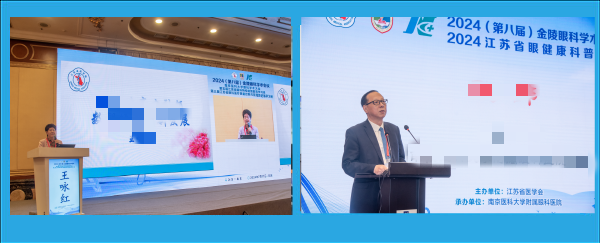
56 SCI theses have been published with a total impact factors of 203.072, including one thesis with impact factor exceeding 10 points and 17 theses with impact factor more than five points.Our hospital has developed an adaptive optical fundus imaging system, which combines basic research with clinical research. The cellular level image examination and analysis technology has reached the international advanced level and has entered clinical trials. The fundus intelligent navigation laser robot jointly developed with Boshi Medical Company accurately locates the laser area and part to achieve automatic excitation, automatic tracking, and automatic protection. The fundus intelligent navigation laser robot was approved for market in September 2024. Our independently developed adaptive vision screening device has been applied in school vision screening and other fields. From 0 to 1, from 1 to N, our path of technological innovation has been solid and steady, with fruitful results.
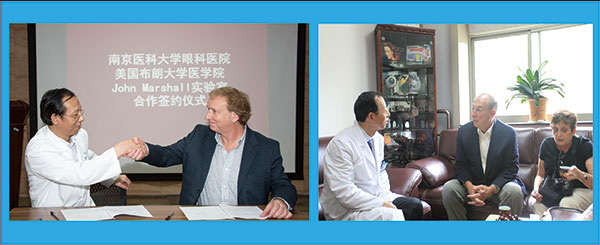
The hospital has hosted national academic conferences such as the "Jinling Ophthalmology Forum" and the "Discussion and Study Class on Difficult Cases of Ocular Diseases" multiple times, and regularly engages in academic exchanges with well-known ophthalmic institutions at home and abroad.
The hospital has extensive academic exchanges with Harvard University, Brown University, Providence University, Nagoya University in Japan, and Sugida Eye Hospital in the United States.
The hospital insists that we should provide the best service for all patients, make great efforts to cultivate high-level talents, strive for scientific innovation and abide by the hospital motto, trying to become a first-class modern eye hospital in China that is also renowned in the world.The hospital has always regarded serving patients and society as the foundation of its establishment.
In the fight against the COVID-19 epidemic, the hospital has sent medical staff to participate in the prevention and control of the epidemic inside and outside the province.
With the support of the provincial and municipal health commissions, the hospital, as a designated hospital for improving the capabilities of key doctors in counties and townships, has signed contracts with more than 100 ophthalmology and medical institutions to establish an eye specialist medical alliance. In 2023, the Nanjing Municipal Health Commission approved the establishment of the "Nanjing Eye Specialist Alliance". Based on the incubation centers of grassroots characteristic departments (ophthalmology) at the provincial and municipal levels, establish remote consultation centers and intelligent reading platforms to provide technical guidance, talent cultivation, and management assistance for grassroots ophthalmology institutions at the provincial and municipal levels. According to the requirements of the municipal and district health commissions, we will provide assistance to the ophthalmology departments of Lishui District Traditional Chinese Medicine Hospital and Yuhua Community Health Service Center, and promote deep cooperation among medical consortia. We have established "hospital government cooperation" with six districts in Nanjing, and established "eye disease prevention and control centers" in cooperation with Liuhe and Lishui districts.
Under the guidance of the Education Department and Health Commission of Jiangsu Province, as the Jiangsu Children and Adolescents Myopia Prevention and Control Research Center, Jiangsu Myopia Prevention and Control Expert Technical Guidance Unit, Jiangsu Science Popularization Education Base, and Nanjing Youth Myopia Prevention and Control Base, we provide technical guidance, technical specifications, science popularization education, scientific research and academic exchanges for myopia prevention and control at the provincial and municipal levels, and have achieved multiple research results. Efforts have been made to complete the "Thousand Villages, Ten Thousand Households Health Campaign - Bright Future" project of Nanjing Medical University, assisting relevant government departments in organizing and implementing annual cross checks on myopia prevention and control data in 13 cities across the province, as well as vision screening for primary and secondary school students in Nanjing. Vision archives and big data platforms have been established for millions of students. At the same time, a myopia prevention and control science popularization practice hall has been established in the Liuhe campus to carry out daily science popularization education.
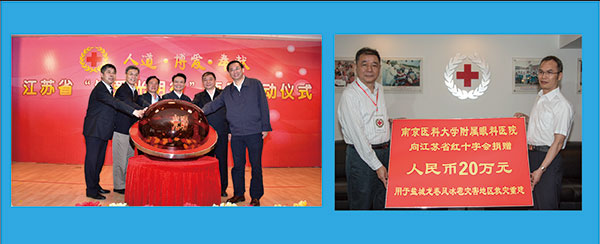
The hospital is also one of the initiators of the Jiangsu Red Cross Love Bright Journey (Cataract) project. It organizes medical teams to conduct free consultations and screenings in the community all year round, and has restored brightness to thousands of low-income cataract patients.
The hospital also participates in remote areas' targeted medical assistance and foreign Red Cross medical assistance activities. On the second day of the 2008 Wenchuan earthquake in Sichuan, the hospital donated 300000 yuan to the disaster area. In 2009, Taiwanese compatriots suffered from a natural disaster, and the hospital donated 200000 yuan in cash at that time. In April 2010, during the Yushu earthquake in Qinghai, the hospital donated 100000 yuan in cash. On June 23, 2016, natural disasters occurred in Funing, Sheyang, and other areas of Yancheng City, Jiangsu Province. The hospital donated 200000 yuan to the Yancheng disaster area through the Jiangsu Red Cross.
